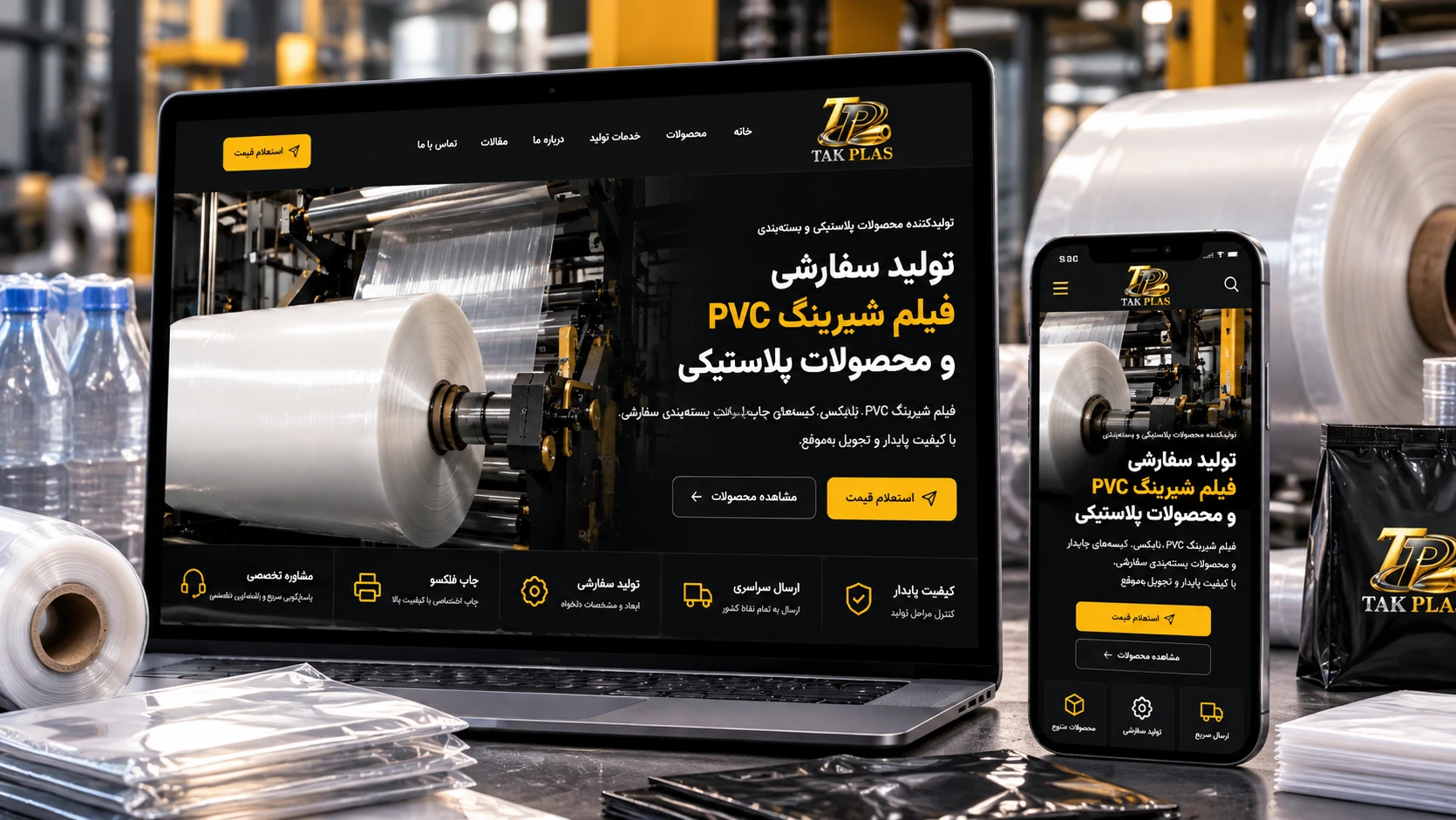

Designing and developing a product-focused platform for PVC shrink film, plastic bags, and packaging products, with a focus on technical structure, SEO, and the inquiry journey.
Starting the Project: When a Digital Presence Needs to Match an Industrial Business
Takplas operates in the production and supply of plastic packaging products, a market where customers often enter the buying process with specific requirements, technical specifications, and order volumes.
In this kind of environment, a website should be more than a generic product showcase.
Visitors need to quickly understand what products are available, what each product is used for, and what the next step is if they need more information or want to request a quote.
The goal of the Takplas project was to create a more structured, professional, and scalable digital presence—one that would be practical for industrial customers while also providing a solid foundation for future growth.
The Goal: Present Products Without Turning the Website Into a Traditional Online Store
One of the most important decisions at the beginning of the project was defining the real role of the website.
Takplas products do not naturally fit a traditional ecommerce model with fixed pricing, a shopping cart, and checkout.
Product type, specifications, order volume, production conditions, and customer requirements can all affect the final price and purchasing process.
A Simpler and More Realistic Journey
Instead of imitating a conventional online store, the website was structured around a clearer process:
Product introduction → Information review → Contact and inquiry
This decision influenced the product page structure, CTA strategy, and even the technical implementation of the website.
The Challenge: Products That Do Not Always Have a Fixed Price
In many industrial businesses, displaying a fixed price next to every product does not necessarily create a better customer experience.
For Takplas, factors such as product type, dimensions, thickness, quantity, order requirements, and customer needs can all affect final pricing.
The goal was not to force visitors into an artificial ecommerce flow.
Instead, each product needed to provide enough information for users to understand the available option and then move naturally toward an inquiry.
Staying Close to the Real Sales Process
This approach reflects the actual way Takplas sells its products.
Rather than forcing the business into a generic ecommerce structure, the website was designed around the company’s real sales journey.

Product Structure: Information Comes Before Visual Styling
Before focusing on visual details, the product structure needed to be defined properly.
Products had to be organized in a way that made sense to users while also allowing new products to be added in the future without creating unnecessary complexity.
A consistent information structure was created for each product so visitors could reach the most important details without searching through scattered content.
From Scattered Information to a Clear Product Page
Instead of being a collection of disconnected text blocks, each product page became a clear destination for product introduction, application details, and the next user action.
This structure also makes future product management and expansion easier.

User Experience: Industrial Without Being Complicated
An industrial website does not need to feel complicated in order to feel professional.
For Takplas, the design needed to reflect the nature of the business while avoiding unnecessary visual or informational complexity.
Each page was structured around a few basic questions:
Users Should Quickly Find the Answers
What is this product?
What is it used for?
What information is needed for an initial decision?
And what should the visitor do next?
This prioritization helped the website remain direct, understandable, and easy to use while still maintaining an industrial identity.
Development: More Control Through a Custom WordPress Theme
Takplas was developed on WordPress, but the goal was not to install a generic theme and simply modify its appearance.
The website was implemented with a custom structure to provide better control over pages, products, user experience, and future development.
WordPress as Infrastructure, Not a Design Limitation
This approach allowed each part of the website to be designed around the actual requirements of the project rather than the limitations of a ready-made theme.
At the same time, content management remained simple enough for the site team to update products and articles without depending on a developer for every change.
SEO: Aligned With the Real Product Structure
SEO for Takplas was not limited to page titles and meta descriptions.
Product structure, URLs, images, internal links, sitemap configuration, and search-engine-readable data were all considered as part of the development process.
Structured Data Should Reflect the Business Model
One of the important technical decisions was aligning structured data with the actual sales model.
When a product does not have a fixed online price, structured data should not create a misleading representation of the buying process.
The technical structure was therefore configured to represent product information more accurately and reduce incorrect signals for search engines.

Content: Beyond Product Pages
For an industrial website, product pages alone are not always enough.
Some users search for product types, applications, comparisons, and technical information before contacting a supplier or requesting a quote.
For that reason, the content section was also considered part of the long-term growth strategy.
Content and Products Should Support Each Other
Specialized articles can help answer user questions while also creating additional entry points from search engines.
In this structure, content and products are not separate parts of the website.
They are designed to support each other over time.
From Development Environment to Final Launch
The project was first developed and tested in a staging environment so changes could be implemented without affecting the live domain.
After the pages, products, technical configuration, and final tests were completed, the website was migrated to the main domain.
Launch Is More Than Moving Files
During the final release, site paths, sitemap configuration, indexing status, links, and core settings were reviewed again to reduce migration issues.
This stage was an important part of the project because a website is not truly finished until the live version performs correctly in its real environment.
The Result: A Digital Foundation Built for Industrial Sales
The final Takplas website is not a traditional ecommerce store—and it was never intended to be one.
The result is a product-focused website designed to introduce industrial products, provide useful information, support specialist content, and guide customers toward direct inquiry.
The structure is simple enough for users to reach their goal quickly, while remaining flexible enough to support future products and content.
The main goal was clear:
Build a professional digital presence that reflects the real business model instead of simply looking like an online store.
What We Learned From the Project
One of the most important lessons from Takplas was that the right website structure has to start with the real business model.
If the sales process is inquiry-based, the website should reflect that reality.
If products require technical explanation, the design needs to provide enough space for that information.
And if the website is expected to grow, its architecture should be ready for expansion from the beginning.
Design Becomes Meaningful When It Starts With Real User Needs
In Takplas, the design and technical decisions became meaningful when they were all built around one question:
What does the real customer need in order to take the next step?
Project Snapshot
Client: Takplas Industry: Plastic Packaging Scope: Strategy, Information Architecture, UI/UX, Custom WordPress Development, Product Structure, Content, SEO Foundation Platform: Web Website: takplas.com