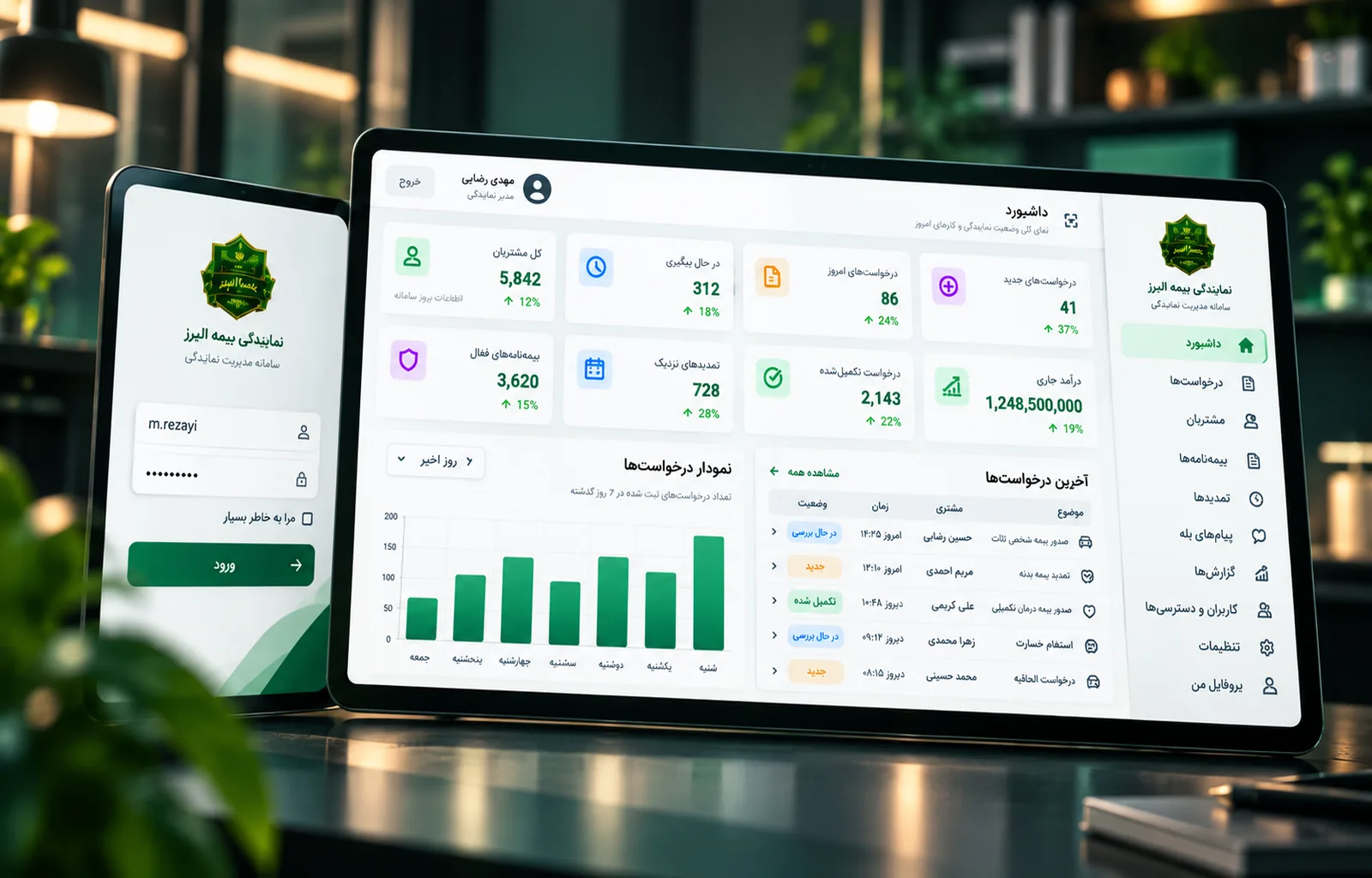

When users interact with a digital product, they usually see only a small part of what is actually happening: a page that loads, a button they tap, a form they submit, or information displayed on a screen.
Behind that simple experience, several different layers are often working together: the user interface, server-side logic, databases, APIs, authentication systems, cloud infrastructure, monitoring tools, and sometimes multiple external services.
The architecture of a digital product determines how these parts connect, how data moves through the system, what each layer is responsible for, and how easily the product can grow without becoming difficult to maintain.
In this article, we go beyond the visible interface and look at the structure behind a modern digital product.
A Digital Product Is More Than What the User Sees
The interface matters, but it is only one part of the product.
An application can look extremely simple while dozens of processes run behind the scenes: retrieving data, validating input, storing information, checking permissions, processing files, sending notifications, and communicating with external services.
Good architecture tries to divide these responsibilities into understandable parts.
The goal is not simply to make the system work.
The goal is to make sure that when new features are added, the number of users grows, or part of the infrastructure changes, the product does not turn into a fragile and difficult system.
The User Interface Layer: Where Users Meet the Product
The frontend is the part of the product users directly see and interact with.
Pages, forms, tables, dashboards, animations, navigation, and different interface states all belong to this layer.
But the frontend is responsible for much more than visual appearance.

The Interface Must Represent the State of the Product Correctly
A professional interface needs to understand what is happening at any given moment.
For example:
- Is data still loading?
- Was the request completed successfully?
- Did an error occur?
- Does the user have permission to perform this action?
- Is there simply no data to display?
These states are part of interface architecture, not minor design details.
As the product becomes more complex, managing state correctly and maintaining a clean relationship with the backend become increasingly important.
Backend: Where the Core Product Logic Lives
If the frontend is the face of the product, the backend is usually its engine.
A large part of the business logic is executed here.
For example, in a commerce system, the backend may be responsible for:
- Calculating the final price
- Checking inventory
- Validating an order
- Applying discounts
- Recording transactions
- Managing permissions
- Communicating with warehouse systems
Important Logic Should Not Exist Only in the Frontend
A common mistake is to enforce sensitive rules only in the interface.
For example, hiding a button from an unauthorized user is not enough.
The backend must independently verify whether the user is actually allowed to perform that operation.
The interface can guide the experience, but final decisions for sensitive operations should happen in a layer the user cannot directly control.
API: The Bridge Between Different Parts of the Product
The frontend usually does not communicate directly with the database.
In many architectures, communication happens through an API.
The frontend sends a request, the backend processes it, and an appropriate response is returned.
This creates a clear boundary between different layers of the system.

An API Is More Than a Data Transfer Channel
A well-designed API needs clear rules.
It should be obvious:
- What data it accepts
- What data it returns
- How errors are represented
- Who can access each endpoint
- How different API versions are managed
When these contracts are unclear, the frontend and backend become tightly coupled to one another, making future changes more difficult.
Database: The Memory of the Product
Every digital product depends on data in some form.
User accounts, orders, settings, messages, projects, transactions, or content all need to be stored somewhere.
The database is where much of the product’s persistent memory lives.
Database Choice Should Follow the Nature of the Problem
Not every product needs the same kind of database.
In many business systems, relational databases such as PostgreSQL or MySQL are a strong choice because relationships between data matter.
Other models may also be useful for caching, search, analytics, or specialized types of information.
The goal is not to choose the newest database technology.
The goal is to understand the structure of the data and the kinds of operations the product needs to perform.
Authentication and Authorization Are Not the Same Thing
Authentication and access control are often discussed together, but they solve different problems.
Authentication answers:
“Who is this user?”
Authorization answers:
“What is this user allowed to do?”
Successful Login Does Not Mean Full Access
Imagine a system with three kinds of users:
- Administrator
- Staff member
- Customer
All three may be able to sign in, but they should not have access to the same capabilities.
That is why permissions should be designed as part of the architecture from the beginning.
If access rules are added later in scattered places, security and maintenance become much harder to manage.
Cloud and Infrastructure: Where Does the Product Run?
Code needs somewhere to run.
The database needs somewhere to live.
Files need to be stored, and user requests need to reach the correct server.
This is where infrastructure comes into the picture.
Many modern products rely on cloud services, but “cloud” by itself is not an architecture.
Infrastructure Should Match the Real Needs of the Product
For a small product, one application server and a managed database may be completely sufficient.
For a high-traffic platform, you may eventually need load balancing, multiple instances, a CDN, distributed storage, or independent services.
The important point is that infrastructure should match the product’s current stage.
Building a highly complex infrastructure for a product with only a small number of users usually provides little practical value.
Cache, Queues, and Supporting Services
Not every task needs to be completed during the user’s request.
Imagine a user places an order and then the system needs to:
- Send an email
- Send a text message
- Generate a report
- Update the CRM
If all of those tasks happen inside the original request, the response may become unnecessarily slow.
Queues Separate Background Work From the Main Request
In this situation, the backend can complete the critical operation first and place secondary jobs in a queue to be processed separately.
Caching solves a different problem.
Data that is requested frequently but changes infrequently can be stored temporarily in a faster layer, reducing repeated work against the main database.
These tools are useful when they solve an actual bottleneck, not when they are added simply to make the architecture look more advanced.
Security Should Be Part of the Architecture, Not a Final Step
Security is not something that should be added after the product is complete.
Architectural decisions affect security from the beginning.
Examples include:
- Where tokens are stored
- How passwords are stored
- How permissions are enforced
- How input is validated
- How requests are rate-limited
- How services communicate
- How secrets are managed
All of these are architectural concerns.
Never Assume a Request Is Valid
Any input coming from a user or external service should be verified.
Even if the frontend has already validated the data, the backend should never assume that the request is trustworthy.
Secure architecture is built around limited trust.
Monitoring and Logging: When the Product Enters the Real World
During development, errors are often visible immediately.
After launch, an issue may happen for a user in another city or country while the development team has no direct view of what went wrong.
Without logging and monitoring, it becomes very difficult to understand the health of the product.
A Product That Cannot Be Observed Is Hard to Maintain
A system should provide useful information about its own behavior.
For example:
- Error rates
- API response times
- Resource usage
- Failed requests
- External service status
Good logging should also provide enough context to trace problems without exposing sensitive user information.
Monolith or Microservices?
One of the most common architecture discussions is whether a product should use a monolith or microservices.
In a monolithic architecture, the main backend responsibilities live inside one application.
In a microservices architecture, those responsibilities are split across multiple independent services.
Microservices Are Not Automatically More Professional
Splitting a system into several services can provide advantages, but it also creates additional cost.
Teams then need to manage service communication, deployment, logging, monitoring, security, and network failures.
For a small team or early-stage product, a well-structured monolith is often easier to build and maintain.
Microservices become more valuable when there is a genuine need for independent scaling, autonomous teams, or strong separation between large product domains.
Scalability Is Not Just About Using a Bigger Server
Scalability is not simply about adding more computing power.
The architecture needs to handle increased load without creating serious bottlenecks.

Bottlenecks Can Exist at Any Layer
The problem may come from:
- The database
- An external API
- Expensive processing
- Large files
- Inefficient queries
- Insufficient caching
- Or even the frontend architecture
That is why scalability should be driven by measurement.
Before making the architecture more complex, we need to know which part of the system is actually limiting performance.
Why You Should Not Over-Architect From Day One
A common temptation in new projects is to design the system for millions of users from the very beginning.
At first, this may sound forward-thinking.
In practice, it often increases development cost and slows the team down.
Architecture Should Support Growth, Not Predict the Future
At an early stage, the product may still be discovering its business model, user needs, and even its core features.
If the architecture becomes too complex too early, the team may spend large amounts of time maintaining infrastructure that never becomes necessary.
Good architecture sits between two extremes:
It should not be so simple that the product breaks as soon as it grows, but it should not be so complex that it becomes an obstacle before growth even happens.
Good Boundaries Matter More Than the Number of Services
A product can have a single backend and still have excellent internal architecture.
Another product can have dozens of microservices and still suffer from unclear responsibilities.
Every Part Should Have a Clear Responsibility
For example:
- Authentication should handle identity.
- Billing should handle payments and invoices.
- Notifications should handle messages.
- Catalog should handle product information.
This separation does not automatically mean creating four independent services.
The important first step is to create clear logical boundaries inside the system.
If needed later, some of those boundaries can become independent services.
Good Architecture Needs to Be Changeable
No architecture remains perfect forever.
Products evolve, new requirements appear, and technologies change.
That means one of the most important qualities of a good architecture is the ability to change.
Less Coupling Creates More Freedom
When different parts of a product depend too heavily on the internal details of one another, changing one area can affect many others.
When boundaries and contracts are clear, change becomes easier.
The goal is not to eliminate every dependency.
The goal is to make dependencies intentional and controlled.
Conclusion
A modern digital product consists of far more than a frontend and backend.
Behind the experience the user sees is a collection of layers and decisions: the user interface, business logic, APIs, databases, authentication, infrastructure, security, caching, queues, and monitoring.
But good architecture does not mean using all of these technologies in every project.
Every layer and every tool should have a clear reason to exist.
The most important question is not:
“How many services and technologies does this product use?”
A better question is:
“Is the product simple enough to manage today, while remaining flexible enough to grow tomorrow?”
Successful architecture is built in that balance between the simplicity we need now and the real requirements that may appear in the future.